

Table of Contents
Objective:
To provide a comprehensive guide on selecting between copper armoured and unarmoured cables by exploring their structural differences, environmental suitability and long-term utility in modern electrical projects.
Choosing the right electrical infrastructure is a pivotal decision for any engineering or construction project. The debate between copper armoured and copper unarmoured cables is not merely about cost, but about matching the physical properties of the conductor and its protective layers to the specific demands of the environment. Copper remains the gold standard for electrical conductivity, offering superior performance over other metals, but the way that copper is “packaged” determines its longevity and safety.
In many modern installations, the complexity of the environment dictates the level of protection required. While the internal copper conductors might be identical in their ability to carry current, the external sheathing and the presence of a metallic “armour” create a significant divide in how these cables are deployed. Understanding these nuances is essential for project managers and engineers who must balance immediate budgetary constraints with the long-term reliability of the power distribution network.
Copper Armoured Cable Price List 2026 and Market Trends
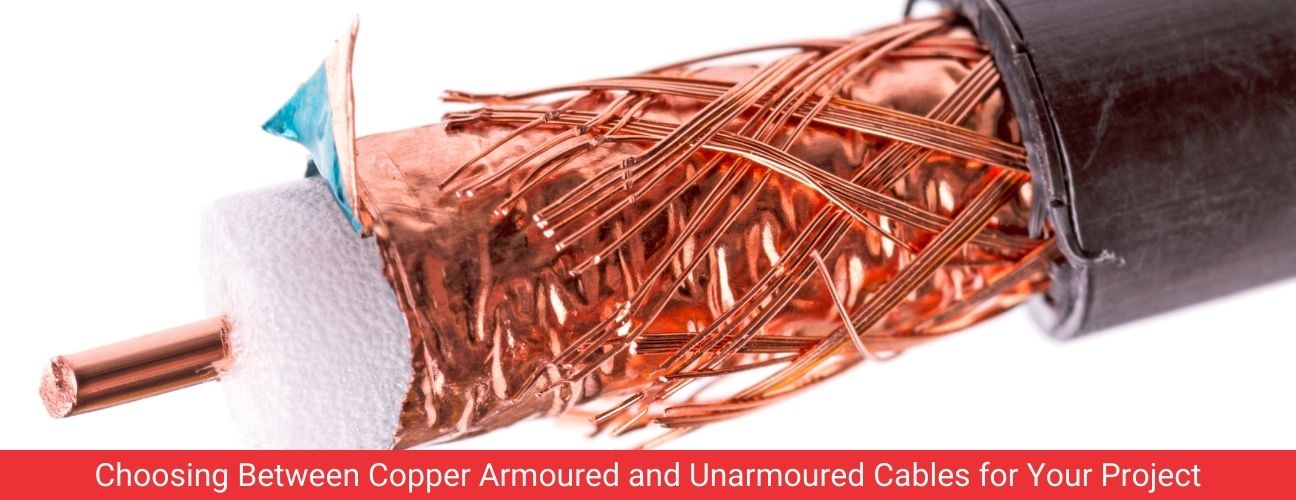
When planning for upcoming infrastructure, looking at the Copper Armoured Cable Price List 2026 helps in forecasting the shifting costs associated with raw material sourcing and advanced manufacturing. Armoured cables are defined by their additional layer of protection – usually steel wire or steel tape – wrapped around the inner insulation. This layer serves as a shield against mechanical damage, such as crushing, impact or rodent interference.
The market for these cables is influenced by the global demand for high-purity copper and the specialized processes required to apply the metallic armour. As projects move toward more hazardous or exposed environments, the demand for reinforced cabling increases. This trend is visible in how large-scale industrial sectors prioritize durability over initial savings, recognizing that a cable failure in a critical system can result in costs far exceeding the initial price of the material.

1.1KV Copper Control Cable Price Per Meter and Signal Integrity
In the realm of automation and signaling, the 1.1KV Copper Control Cable Price is a frequent consideration for those designing control panels and machinery interfaces. Control cables are the “nerves” of an industrial system, carrying low-voltage signals that coordinate complex operations. Because these cables often run alongside high-power lines, the choice between armoured and unarmoured variants becomes a question of both physical protection and electromagnetic interference.
Unarmoured control cables are often preferred in indoor, controlled environments where the cables are housed in protective conduits or trunking. Their flexibility makes them easier to route through tight bends and small spaces within a facility. However, if the control signals must travel between buildings or through areas where they might be exposed to physical stress, an armoured version becomes a necessity to ensure that the vital data flow remains uninterrupted by external physical factors.

Annealed Copper Cable Price List with its Conductor Quality
The foundation of any high-quality cable is the state of the copper itself. Reviewing an Annealed Copper Cable Price List reveals that the process of annealing – heating the copper and then cooling it slowly – is vital for making the wire more flexible and less brittle. This process is used for both armoured and unarmoured cables to ensure they can be handled and installed without the copper strands snapping or cracking.
Annealed copper provides excellent conductivity and workability. In unarmoured applications, this flexibility is a primary selling point, allowing for easy installation in residential and commercial buildings. In armoured cables, the annealed copper cores are protected by the rigid outer armour, creating a product that is both electrically efficient and physically “battle-ready.” The choice here depends on whether the cable needs to rely on its own flexibility or if it needs the external reinforcement to survive its environment.
PVC Insulated Copper Cable and its Environmental Protection
Insulation is the first line of defense for any conductor and the PVC Insulated Copper Cable Rate reflects the popularity of Polyvinyl Chloride as a standard coating. PVC provides a reliable balance of moisture resistance, flame retardancy and dielectric strength. For unarmoured cables, the PVC jacket is the only protection the copper has, making it suitable for indoor use where the risks of abrasion or heavy impact are minimal.
In armoured cables, the PVC layer usually sits beneath the metal armour as an inner sheath and above it as an outer jacket. This “sandwich” construction ensures that the metallic armour does not damage the copper insulation while protecting the entire assembly from chemical exposure and moisture. When selecting for a project, one must decide if the single layer of PVC in an unarmoured cable is sufficient or if the added security of a metal-reinforced PVC system is required.
Armoured vs Unarmoured Copper Cable Cost in 2026
The Armoured vs Unarmoured Copper Cable comparison is a central part of value engineering. While unarmoured cables are less expensive upfront due to their simpler construction and lower weight, they often require additional infrastructure like PVC conduits or metal trays to protect them. These secondary costs can narrow the price gap between the two options.
Armoured cables, on the other hand, are often “direct-burial” rated. This means they can be laid directly in a trench without the need for a conduit, saving on labor and additional material costs. When choosing for your project, it is important to look beyond the price per meter and consider the total cost of installation, the environment of the site and the potential cost of system downtime should a less-protected cable fail.
1.5 sq mm Copper Control Cable Price and its Precision Wiring
For smaller-scale applications, the 1.5 sq mm Copper Control Cable is a baseline for many technicians. These smaller gauges are used extensively in lighting circuits and low-power control systems. Because of their small diameter, they are highly susceptible to being pinched or cut. In a factory setting where machinery is frequently moved or adjusted, choosing an armoured version of this small cable can prevent accidental damage that could shut down a production line.
Testimonials
“Guys it’s really good quality of cables…..
I am also using. So why are you wating
Order Now………”
2.5 sq mm Copper Armoured Cable with Safety Standards
When moving into general power distribution, the 2.5 sq mm Copper Armoured Cable Cost becomes relevant for wiring small motors or heavy-duty appliances. At this size, the cable is robust enough for light industrial use. The armouring ensures that the cable meets safety standards for areas where human traffic or light equipment might come into contact with the wiring, providing a layer of safety that unarmoured cables simply cannot match.
4 sq mm Copper Power Cable
The 4 sq mm Copper Power Cable Price is a key metric for medium-power applications. These cables are workhorses in both commercial and industrial settings. Choosing an unarmoured version for indoor office wiring provides cost efficiency, while an armoured version for a warehouse floor ensures that the cable can withstand the weight of a pallet jack or heavy foot traffic without compromising the electrical circuit.
Our Other Cables: 1.1Kv Aluminium 3.5 Core (Armoured) Cable
6 sq mm Copper Cable Cost per meter and Installation Efficiency
In many residential and light commercial projects, the 6 sq mm Copper Cable Cost per meter helps determine the budget for sub-main circuits. This size is often used to connect distribution boards. If the cable path involves running through a garden or under a driveway, the armoured version is mandatory in many regions to protect against future excavation or ground shifting.

10 sq mm Copper Armoured Cable and its Industrial Strength
For heavier loads, the 10 sq mm Copper Armoured Cable Rate reflects a cable designed for serious power. At this thickness, the cable is often used for main power supplies in small workshops or large home extensions. The armour provides a vital earth path in many systems, adding an extra layer of electrical safety alongside its mechanical benefits.
16 sq mm Copper Cable: Price and Versatility
The 16 sq mm Copper Cable Price is a factor for those installing EV charging stations or industrial equipment. These cables must handle significant current over long periods. The choice between armoured and unarmoured depends heavily on whether the charging unit is located indoors in a garage or outdoors in a public parking lot where the cable might be exposed to the elements and physical wear.
25 sq mm Copper Cable Rate and Distribution Networks
In larger distribution networks, the 25 sq mm Copper Cable Rate covers cables that act as the backbone for smaller industrial units. These cables are rarely left “loose” and are almost always armoured if they are being run along external walls or underground, ensuring that the primary power source for a facility is not easily compromised.
35 sq mm Copper Cable Price and High-Capacity Needs
The 35 sq mm Copper Cable is consulted for high-capacity feeders. At this stage, the cables become quite heavy and less flexible. The armouring adds to this weight, but it is necessary for cables that are likely to be pulled through long underground ducts where high tension during installation could damage an unarmoured jacket.
50 sq mm Copper Armoured: Price and its Heavy Infrastructure
For major power requirements, the 50 sq mm Copper Armoured Cable is a significant line item. These cables are essential for main service entries and large industrial motors. The steel wire armour provides the tensile strength needed for vertical runs in high-rise buildings, supporting the weight of the cable itself over several floors.
95 sq mm Copper Cable Using Large-Scale Projects
At the level of the 95 sq mm Copper Cable Price, we are looking at cables used in power stations and massive manufacturing plants. These are rarely unarmoured unless they are being installed in highly specialized, climate-controlled cable vaults. In most practical applications, the risk of damage to a cable of this capacity is so high that armouring is a standard requirement.
120 sq mm Copper Cable Rate and Urban Development
The 120 sq mm Copper Cable Rate is a concern for urban infrastructure projects, such as street lighting networks or underground municipal power lines. In these environments, the soil can be corrosive or rocky and the presence of other utilities means that any future digging is a risk. Armoured cables provide the necessary protection to ensure urban power remains stable.
185 sq mm Copper Cable Price and Industrial Efficiency
When evaluating the 185 sq mm Copper Cable, engineers are often looking at the most efficient way to transport bulk power across a site. The heavy copper cores provide low resistance, while the armour ensures that the cable can be laid in rough terrain. This combination of electrical efficiency and physical toughness is the hallmark of a well-chosen industrial cable.
240 sq mm Copper Cable and High-Voltage Systems
The 240 sq mm Copper Cable Price is representative of the top tier of power transmission within a facility. These cables handle immense loads. Because of the heat generated by such high currents, the insulation and the armour must be designed to allow for heat dissipation while still providing maximum protection against external factors.
Our Other Cables: Copper Armoured Cable / Copper Unarmoured Cable (1.1KV Copper Annealed)
300 sq mm Copper Armoured Cable and Substation Connectivity
For substation connections, the 300 sq mm Copper Armoured Cable Cost is a critical calculation. These cables are the primary arteries of a power grid. The armouring here is not just for protection against tools or animals; it also provides a robust path for fault currents, which is essential for the grounding and safety systems of a high-voltage substation.
400 sq mm Copper Cable Cost and Bulk Power Transport
Moving toward the peak of power distribution, the 400 sq mm Copper Cable covers cables used in heavy industry like steel mills or mining operations. In these environments, “standard” protection is not enough. The cables must survive in conditions of extreme heat, vibration and mechanical stress, making the heavy-duty armoured version the only viable choice.
630 sq mm Heavy Duty Copper Cable Price and Ultimate Durability
Finally, the 630 sq mm Heavy Duty Copper Cable represents the pinnacle of cable engineering. These massive cables are used for the most demanding applications, such as connecting large generators or transformers. At this scale, the distinction between armoured and unarmoured is clear: the physical scale of the project demands the maximum possible protection to ensure that the massive energy being transported is contained and protected from any possible external interference.

Conclusion:
Choosing between copper armoured and unarmoured cables requires a holistic view of your project’s needs. If your installation is indoors, protected by conduits and budget-conscious, unarmoured cables are an efficient and flexible choice. However, for any application involving underground burial, outdoor exposure or high-traffic industrial zones, the protection offered by armoured cables is an investment in safety and reliability that pays for itself over the life of the project.
Table of Contents