

Table of Contents
Aluminium Armoured Cables vs. Copper Armoured Cables: Choosing the Best Fit
Objective:
To provide a comprehensive technical and practical comparison between aluminium and copper armoured cables, helping project managers and engineers determine the most efficient and cost-effective wiring solutions based on specific industrial and residential requirements.
Understanding the Metal Core: Conductivity and Efficiency
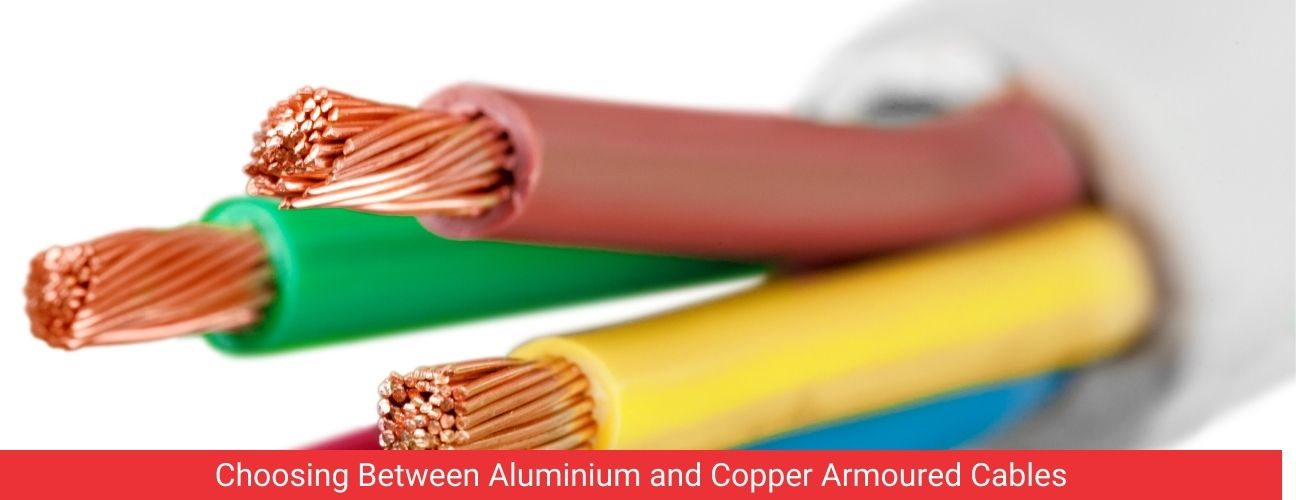
The debate between copper and aluminium as a conductor material is as old as modern electrical engineering itself. When choosing between these two, the primary consideration is the electrical conductivity and how it impacts the physical size of the cable. Copper is naturally more conductive, allowing for smaller diameters to carry the same electrical load. This makes it the standard for tight spaces or complex control systems. For instance, in sensitive machinery, a 1.5 sq mm Copper Control Cable Price is often outweighed by its reliability and compact footprint.
On the other hand, aluminium is significantly lighter – roughly one-third the weight of copper. While it requires a larger cross-sectional area to achieve the same ampacity as copper, its weight advantage makes it the go-to choice for long-distance power distribution and overhead lines. In these large-scale infrastructure projects, the reduction in structural support costs often makes the decision clear.

25 sq mm Aluminium Armoured Cable Price Factors in Modern Infrastructure
When scaling up for industrial facilities, the 25 sq mm Aluminium Armoured Cable Price becomes a significant talking point for budget planning. At this size, the cable is typically used for sub-mains or heavy-duty power supplies where weight is a factor. Because aluminium is less dense, installing these cables across high-rise buildings or long industrial warehouses is physically easier for the labor force.
However, engineers must account for the “creep” factor. Aluminium has a tendency to expand and contract more than copper under thermal stress. This means that while the initial 25 sq mm Copper Cable Price might be higher, copper offers a “set it and forget it” stability that aluminium lacks. Proper termination and the use of bi-metallic lugs are essential when using aluminium to prevent oxidation at the connection points, which could otherwise lead to overheating.
Read Our Article: Choosing the Right Aluminium Armoured Cable: A Comprehensive Guide
16 sq mm Copper Cable Price and the Reliability of Small-Scale Projects
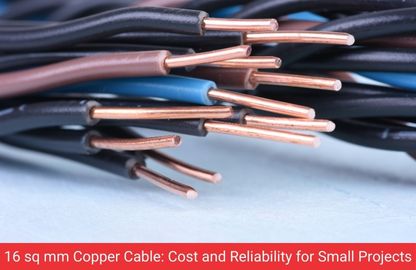
In many residential and light commercial applications, copper remains the king of reliability. The 16 sq mm Copper Cable Price is often considered a worthwhile investment because of the metal’s superior ductility. Copper can be bent and routed through conduits with a much lower risk of fracturing compared to aluminium. This is particularly important for smaller gauges.
While you might look at the 16 sq mm Aluminium Armoured Cable Price and see a significant saving, the long-term maintenance costs can bridge that gap. Copper does not require the same frequent inspection of terminal tightness that aluminium does. For projects where the cables are buried or hidden behind walls, the peace of mind offered by copper’s corrosion resistance is invaluable.
50 sq mm Aluminium Armoured Cable Rate for Industrial Distribution
As we move into mid-range power distribution, the 50 sq mm Aluminium Armoured Cable Rate often provides the best balance between cost and performance for factory floor layouts. At this thickness, the cable is robust enough to handle significant current without the extreme weight that a copper equivalent would possess.
In contrast, the 50 sq mm Copper Armoured Cable Price might be steeper, but it allows for much smaller conduits. In a facility where space is at a premium and every inch of the cable tray is accounted for, the compact nature of copper is a technical necessity. If the project allows for larger trays and a slightly more involved installation process, switching to aluminium can save a substantial portion of the electrical budget.
Our Other Cables: Copper Armoured Cable / Copper Unarmoured Cable (1.1KV Copper Annealed)
95 sq mm Copper Cable Price and High-Load Demands
For heavy-duty machinery and main power feeders, the 95 sq mm Copper Cable Price reflects the premium nature of high-purity copper. At this capacity, the electrical losses are a major concern. Copper’s lower resistance means less energy is wasted as heat, which can lead to lower operational costs over the 20-to-30-year lifespan of a building.
Conversely, the 95 sq mm Aluminium Armoured Cable Price is highly attractive for temporary power setups or projects with strict upfront budget caps. While the 120 sq mm Aluminum Cable Cost might be more comparable in terms of current-carrying capacity to a smaller copper cable, the sheer volume of metal required for aluminium means the project must have the physical space to accommodate the larger diameter and larger bending radius.
185 sq mm Aluminium Armoured Cable Price in Power Grids
Large-scale utility projects often prioritize aluminium for its massive weight savings. Exploring the 185 sq mm Aluminium Armoured Cable Price reveals why it is a staple in power grid expansions. When running cables for kilometers, the cumulative weight of copper would require significantly more expensive support structures and specialized heavy-lifting equipment.
However, the 185 sq mm Copper Cable Price is still relevant for data centers or hospitals where any risk of connection failure is unacceptable. Copper’s thermal conductivity allows it to dissipate heat faster during peak loads, which is a critical safety feature in environments that run at near-maximum capacity 24/7.
Testimonials
“Guys it’s really good quality of cables…..
I am also using. So why are you wating
Order Now………”
300 sq mm Copper Armoured Cable Price and Heavy Infrastructure
In massive infrastructure projects like metro stations or large shipping ports, the 300 sq mm Copper Armoured Cable Price is often factored in as a durability expense. These environments are often harsh, with vibrations and moisture that could degrade aluminium more quickly. Copper’s natural patina protects it from deep corrosion, ensuring the core remains conductive for decades.
For more protected industrial environments, the 300 sq mm Aluminium Armoured Cable Price offers a way to complete the project under budget without sacrificing safety, provided the engineering team is diligent about using proper jointing compounds. The same logic applies when looking at the 240 sq mm Aluminium Armoured Cable Price or the 240 sq mm Copper Cable Price; the choice hinges on the environment’s aggressiveness and the availability of skilled labor for installation.
400 sq mm Aluminium Armoured Cable Price and High-Voltage Efficiency
When dealing with extremely high currents, the 400 sq mm Aluminium Armoured Cable Price provides a pathway for massive power transmission. At this size, the physical diameter of the cable is substantial. If you were to compare it with the 400 sq mm Copper Cable Cost, the weight difference would be measured in tons over a long run.
Engineering teams must choose between the high initial cost of copper and the increased physical footprint of aluminium. While a 630 sq mm Heavy Duty Copper Cable Price might seem astronomical, it can carry an immense amount of power in a relatively thin profile compared to the 630 sq mm Aluminium Armoured Cable Price equivalent, which would require a significantly larger outer sheath and more robust mounting brackets.
The Role of Smaller Gauges in Project Precision
Even in large industrial projects, smaller cables play a vital role in control and monitoring. The 2.5 sq mm Copper Armoured Cable Price is a standard reference for those installing lighting circuits or secondary control loops. Because copper is so much more reliable in these smaller sizes, many national standards actually prohibit the use of aluminium for conductors below a certain cross-section (usually 10 sq mm or 16 sq mm).
This is why you will see the 4 sq mm Copper Power Cable Price and 6 sq mm Copper Cable Cost per meter frequently cited in residential and commercial electrical tenders. For these smaller loads, the 4 sq mm Aluminium Armoured Cable Price or 6 sq mm Aluminium Armoured Cable Price rarely makes sense, as the savings are minimal compared to the increased risk of breakage during the wiring of switches and sockets.

Choosing for the Long Term: Maintenance and Life Cycle
The decision-making process doesn’t end at the point of purchase. For example, comparing the 10 sq mm Aluminium Armoured Cable Price to the 10 sq mm Copper Armoured Cable Rate requires looking at the “Total Cost of Ownership.” Aluminium requires specialized maintenance to check for oxidation and to ensure that the connections haven’t loosened due to thermal cycling.
In projects where the 35 sq mm Aluminium Cable Price is used to save on capital expenditure, a portion of those savings should be set aside for periodic thermal imaging and tightening of terminals. In contrast, the 35 sq mm Copper Cable Price List might show a higher upfront cost, but the maintenance schedule is generally much lighter.
Our Other Cables: Aluminium Armoured Cable (1.1KV 4 Core)
Scaling Up to Extreme Industrial Needs
For specialized heavy industry, such as mining or large-scale smelting, the requirements go beyond standard sizes. Looking at the 500 sq mm Aluminium Armoured Cable Price, 800 sq mm Aluminium Armoured Cable Price and even the 1000 sq mm Aluminium Armoured Cable Price shows a market dominated by aluminium. At these extreme sizes, the weight of copper becomes nearly impossible to manage for anything other than short, specialized busbar connections.
Even the 1500 sq mm Aluminium Armoured Cable Price highlights how aluminium has made ultra-high-capacity power transmission possible for modern cities. By managing the conductivity gap through sheer volume and careful engineering of the surrounding insulation and armouring, aluminium provides a sustainable and cost-effective solution for the world’s growing energy needs.

Conclusion:
Ultimately, the choice between copper and aluminium depends on the specific constraints of your project. If space is tight and reliability is the top priority, copper is the logical choice. If the project involves long distances, overhead runs or tight budget constraints, aluminium is a highly capable and proven alternative.
Whether you are looking for the 120 sq mm Copper Cable Rate for a high-reliability server room or the 95 sq mm Aluminium Armoured Cable Price for a new warehouse wing, understanding these technical nuances ensures your electrical infrastructure is built to last.
Table of Contents